
A doll and its clothes make a compelling display. For a collection record, each garment also deserves its own identity, condition notes and evidence.
Give the wardrobe a separate record
The V&A’s Barbie and Sindy fashion feature places clothing at the centre of its comparison, connecting Sindy with designers Foale & Tuffin. That is a useful invitation to study garments as objects rather than treating them as anonymous decoration. It does not establish which outfit belongs with a particular loose doll.
Create a garment record that includes a front and reverse photograph, label transcription, closure description, visible repairs and the doll it arrived with. Use “arrived together” as a factual relationship. Reserve “issued together” for a connection supported by a named source.
Measure the question you need to answer
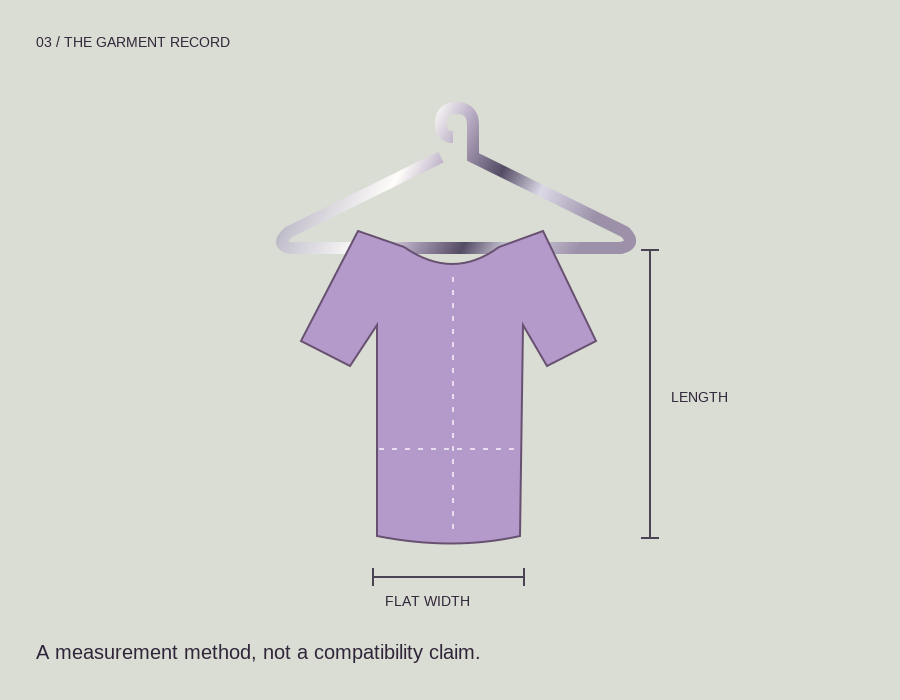
For a fit comparison, note the garment’s flat width and length, the measurement units, and how you took them. Record whether a closure was open or closed. Those details make a later comparison reproducible. Do not stretch an old garment to obtain a more convenient number.
Measure the doll separately only where it is safe to do so. A shared brand name or a similar overall height is not a measured fit test. Treat shoulder width, waist opening, sleeve opening and closure position as separate questions. This is a suggested comparison workflow, not a brand-specific compatibility chart.
Describe a fit observation narrowly
“Closure met without tension on this doll during this observation” is narrower and more useful than “fits all dolls in the line.” A flat measurement can be recorded even when a fitting would put an object at risk.
Record shoes, bags, stands and jewellery individually. Link each accessory to the source used to identify it. Keep a field for “unmatched” so an unidentified piece does not disappear from the inventory. A small photograph with a scale and an object label is often a better starting record than a guess.
Make completeness a documented question
Build an expected contents list from an edition-specific source, then mark what is actually present. Keep substitutions and repaired items visible in your notes. If the source is incomplete, call your list provisional. A persuasive display and a documented complete set are different claims, and both can be described accurately.
Keep the research attached to the garment even if you move it to another doll for display. This preserves the distinction between the collection’s history and today’s arrangement. Use the worksheet’s provenance and questions fields to note the change and the reason.
Sources & scope
Source facts and our suggested recording methods are distinguished in the text. Sources consulted 27 September 2026; source publication dates, where available, are shown below.
- Victoria and Albert Museum — Barbie vs Sindy: who wins the fashion race? ↗Source date: 2024-04-17. Consulted 27 September 2026.